
High ozone levels may complicate reproduction of insects and lead to population decline, a study published in Nature Communications finds.
Max Planck Institute researchers were experimenting with individuals of nine different Drospholia fruit fly species and exposed them to elevated ozone levels of 100 parts per billion (ppb). After two hours, the concentration of men-specific pheromones was significantly reduced.
The problem: It is common knowledge that a lot of insects select their partners for reproduction through the scent of their pheromones. The problem: It is common knowledge that a lot of insects select their partners for reproduction through the scent of their pheromones. Evolution developed a variety of species-unique odor signatures that help to identify sex and mating status of potential mates. Chemically, more than 90 percent of these pheromones contain carbon-carbon double bonds. The assumption that ozone may be able to break down (oxidize) such bonds goes back to a Chemosphere study published in 1995. “For me, it’s surprising that no one really studied the effects on insect pheromone communication up to the present day”, states Markus Knaden, lead author of the study and researcher of evolutionary neuroethology at the Max Planck Institute.
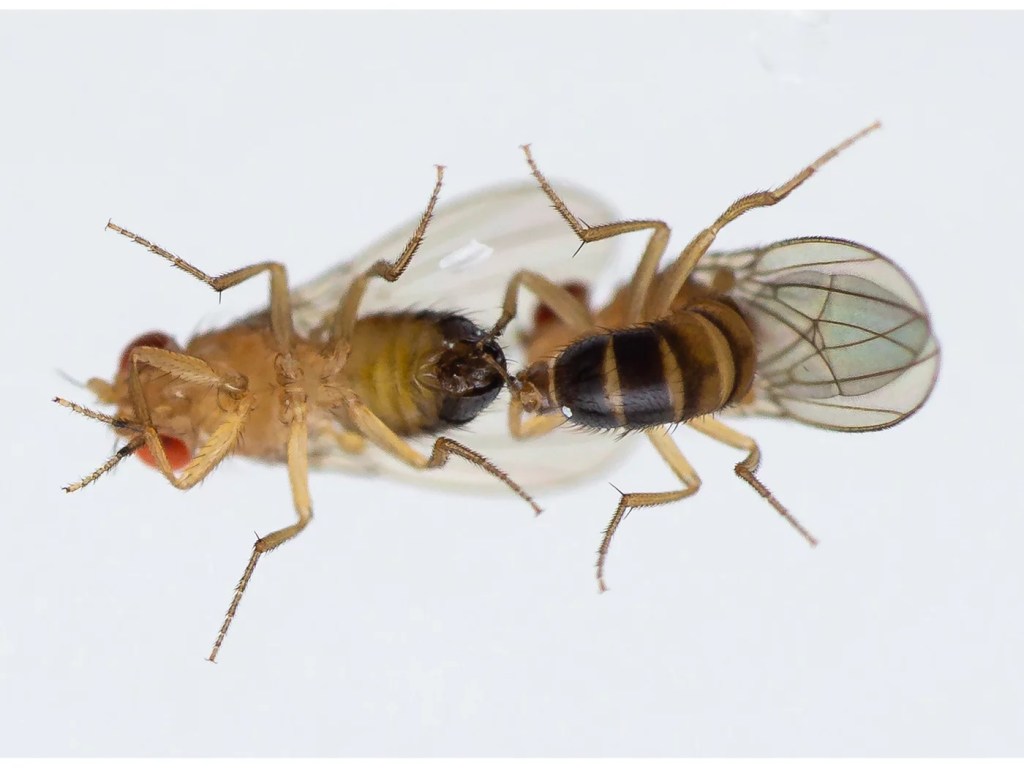
By breaking down pheromones, ozone caused Drospholia females to be less attracted to males. The exposure also led to a rise in the number of attempts to mate between males – probably due to the fact that males smell less like males, Knaden says. Both effects were observed in eight out of nine tested Drospholia species. A second result: The longer the ozone exposure time, the stronger was the pheromone breakdown.
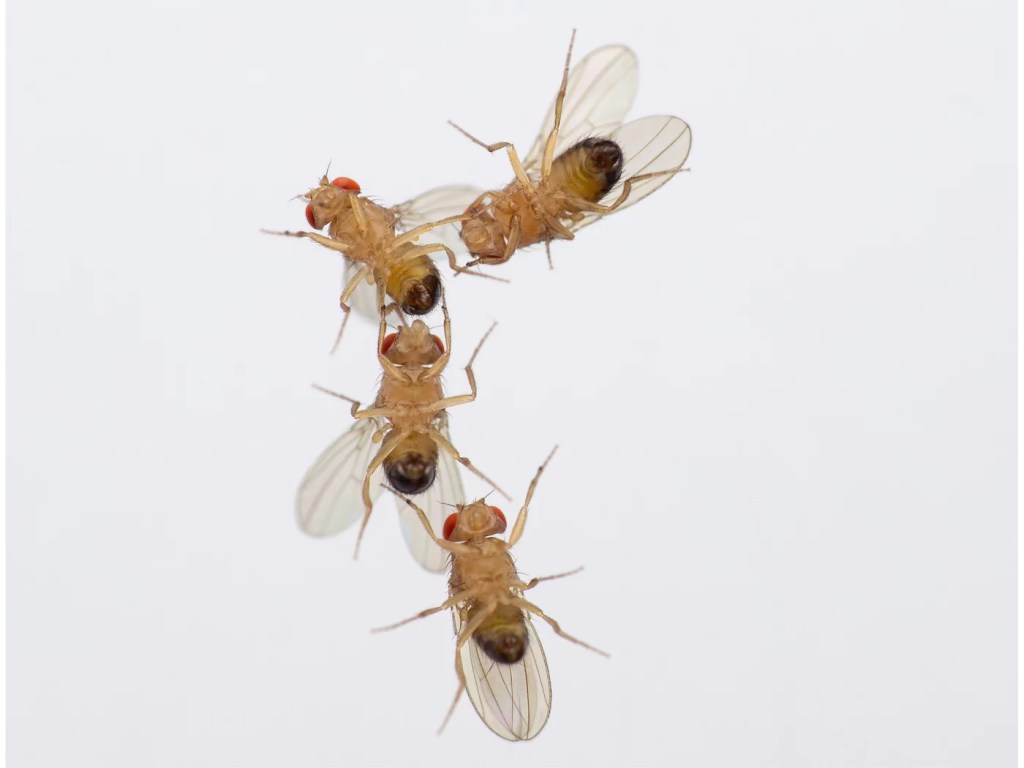
The selected ozone concentrations represent real-life conditions. Average ozone levels are globally at roughly 40 parts per billion (ppb), but regions like India, China or Mexico experience magnitudes as high as 210 ppb. German cities also exceed the 100 ppb threshold during hot summer days from time to time, Knaden stresses.
As a lot of insects are using pheromones for communication and colony coordination, the finding is also relevant in a broader picture. What happens to fruit flies may be a danger for other insect species too. “Everyone knows that we are facing an insect decline, and so far the reasons were pesticide use and habitat loss. But we think that we should also consider oxygen pollutants,” says Knaden. “You don’t even want to envision what happens if social structures in ant colonies or beehives suddenly collapse because pheromone communication no longer works.”
The whole study was published in Nature Communications.
 ecocidenews.org